admin
admin 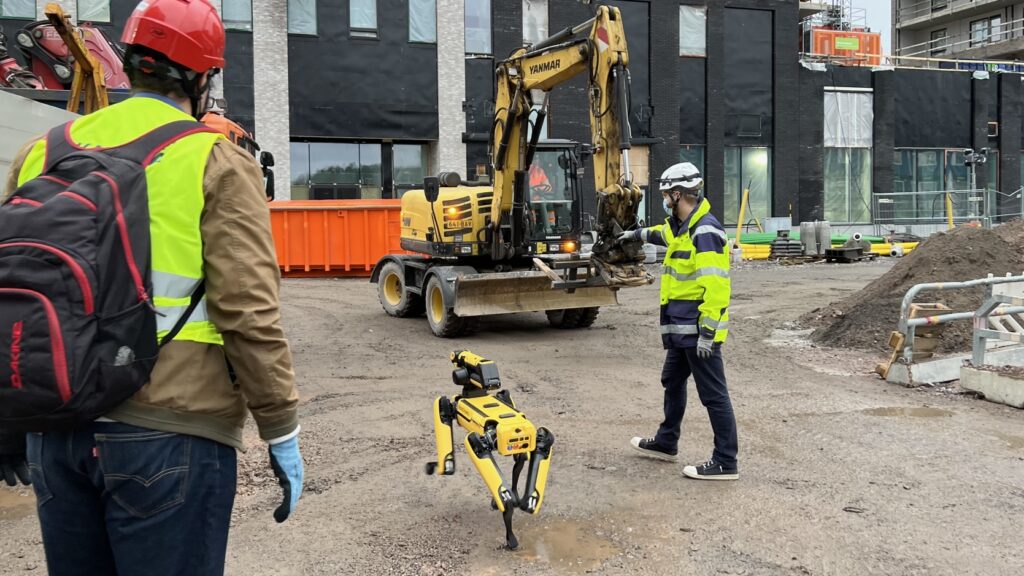
In construction, we have the knowledge, technology, and innovative people to radically improve our performance, yet we’re still stuck in old ways. Why is that?
I attended an annual gathering for real estate and construction professionals at Rakennustieto Oy, Finland’s leading building information provider. The day before, a half-day seminar was held at the same venue. During both events, we discussed the need for change in the construction sector. Everyone agreed that we need to radically improve how we produce and share information.
Three types of research investment
Just before the events, I came across an MIT News interview with Eugene Fitzgerald, a professor in MIT’s Department of Materials Science and Engineering. He has not studied the construction sector specifically, but his findings and conclusions align with our situation.
Fitzgerald discusses three types of research. He calls the first “altruistic science,” which invests in academic institutions to produce educated people. There is no direct ROI. The second category is strategic research organized around a goal, such as safer, faster, or lower-carbon delivery. It can span several areas and disciplines.
The third of Fitzgerald’s categories is “fundamental innovation,” which covers the whole long-term process from research to economic growth. This concept is especially relevant to construction because it keeps three questions in view throughout the process:
- Technology: What is physically or technically possible?
- Implementation: How can it be built, delivered, integrated, and operated?
- Market: Who will adopt it, and why?
This thinking is very relevant to construction technology. Startups announce a solution that will “revolutionize” an existing task or business process. They manage the first part but neglect the implementation and market dimension. “Revolution” never happens.
Getting from invention to innovation takes three things: balancing technology with implementation and market fit, mobilizing collective effort across our fragmented industry, and giving good ideas the repetition they need to mature into standard practice.
How to frame an innovation: an example
Innovative people often discover a new, exciting technology, see its potential, and assume it will take off because it can do things faster and more efficiently than a human. For example, we have seen robots that can collect data for construction management and for quality and safety systems. However, they haven’t yet become popular.
Developers have first focused on the technology dimension: how the robot can maneuver autonomously on an ever-changing construction site. There have been advances, but this is not a fully solved problem, as I’ve witnessed in real-life tests.
The implementation remains an open question: How will the robot be transported, charged, maintained, insured, programmed, and integrated into daily site operations? Who will operate it, review its data, and respond to changing conditions? Can it work alongside existing equipment, safety procedures, and project workflows?
As critical is the market dimension: Who needs this capability, and who is willing to pay for it? Is the value in reducing manual inspections, improving safety, documenting progress, supporting quality control, or generating better data for AI-based decision-making? Do the benefits justify the still-high investment, maintenance costs, and disruption of introducing the robot?
One solution robot developers can consider is to provide management and quality information as a service, use robots for data collection, and free the customer from owning and maintaining them.
Innovation requires collective action
The construction sector is project-based and includes dozens of companies with varying degrees of capabilities even in a small project. Any invention faces friction from the contractual incentives, business models, and general industry and regulatory conditions. If we want inventions, big or small, to become innovations, we need to address most, if not all, of these issues, which for one company or team is a huge task.
Fitzgerald’s idea that innovation is the product of decentralized collective intelligence is helpful in our sector. He notes that people, companies, institutions, and disciplines contribute pieces of the puzzle, often without knowing where the process will lead. No single actor necessarily “owns” the entire innovation process. Value emerges through interaction.
We are seeing that collective intelligence at play in Finland. Consortia like Building 2030 and Talotekniikka 2030 (on building services), and projects like AI Champion and RYTV, bring industry professionals and researchers together to explore new processes and technologies.
Building 2030’s work, for example, has led to the widespread adoption of takt production in Finland. When the idea was first introduced, most professionals thought it was not applicable to construction. Now, coupled with logistics integration, it shortens construction time by 30 to 50 percent when it’s applied systematically.
Repetition is critical to innovation
In addition to collective intelligence, ideas and inventions need repeated use and continuity to become innovations. That’s best achieved with teams that use and hone new technologies and processes over many iterations. They are committed and don’t give up on the first problem. They are also willing to teach others what they’ve learned.
The practical way to achieve repetition is to employ the same innovative teams across several projects. This was also an idea expressed by some presenters at the Rakennustieto event. Suppliers are incentivized to invest in innovations and systematization if they see continuity. This should also benefit the client through lower costs, faster output, or reduced risks.
What to do next
We have no shortage of ideas or technologies; turning them into innovations that truly benefit the industry is a challenge.
I urge innovators within companies and startups to view what they’re developing from the customer’s perspective: why do they need this invention so badly that they’re willing to change the way they operate or buy and invest in implementing it systematically? I also ask business owners and clients to create the conditions for an innovation to become a true competitive advantage, including committing to the same teams across projects so ideas gain the repetition they need to mature into standard practice.