admin
admin 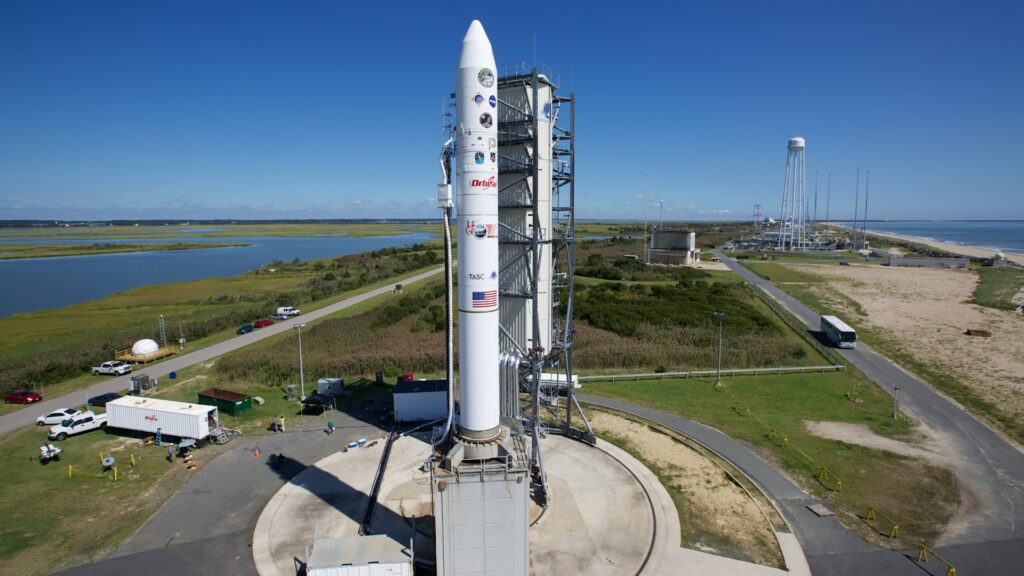
When I worked as an architect, our team designed a laboratory for fuel research. The facility included a large research hall where various boilers and other devices were tested and analyzed. The setup required extensive floor channeling under the thick concrete floor. We suggested building a modular system that would allow flexibility in the future, when requirements would certainly change. They did not want that because of budget constraints.
The high-tech construction trend is spreading. Data centers, semiconductor fabs, battery plants, and life science facilities share one property that sets them apart from ordinary buildings. The technology inside turns over faster than the structure around it. Server generations change every three to five years. Rack densities have risen from 10 or 20 kW to 130 kW and beyond in just a few years.
A high-tech facility is really several buildings with different lifespans inside one envelope, and we keep designing them as if they were one. The failure is not that things become obsolete. It is that we never say when each layer is expected to.
The layers wear out on different clocks
Jennifer Webb of BRPH described the method at a Global Spaceport Alliance panel I followed. Separate the lifelong backbones, the core, from the mission areas that will be swapped out. Establish the core early and build in enough redundancy that operations continue while older systems are replaced. That, in this case, gives you three clocks instead of one.
In a data center, the shell may last forty years, the power and cooling backbone fifteen to twenty, and the mission layer three to five. Naming those numbers during design helps decide where to pay for flexibility.
My laboratory example demonstrates that if the life cycles have not been considered during project planning and budgeting, flexibility won’t be built in.
Flexibility has a price, and somebody has to name it
Once you know the clocks, the next question is what the flexibility costs. Cliff Higgins of BRPH, who spent a decade running launch facility construction at Blue Origin, gave the clearest example on the panel. Putting a valve in the right place during design might cost five thousand dollars. Discovering ten years later that you needed it can cost thirty million to work around. He was describing a decision made before anyone could know the answer.
How much to buy is still individual judgment, and the valve shows why: obvious in hindsight, invisible beforehand. Repetition turns that judgment into evidence, because a firm that has delivered forty data halls knows which spare capacity got used.
Design the end, not only the life
In the 2020s, circularity must be included in the specifications early on. There are several strategies to realize it, from materials to structures and entire volumetric components.
The use of prefab in high-tech buildings makes reuse of structures and components easier than in traditional construction. The structures and components are well-documented and can be easily dismantled. Even when reuse was not originally designed, modular components can be deconstructed as the European ReCreate project and Finnish reuse of hollow core elements demonstrate.
I worked on mobile phone factory projects in the 1990s. The client acknowledged that the facilities would become functionally obsolete in less than ten years, so longevity was not a requirement. Build fast, assume it will all be dismantled. That was a rational response to a moving target, and it is the one case where we did name the lifespan. We just stopped thinking at the end of it. Dismantling meant waste, because nobody specified what the components should become next.
The delivery model decides what is possible
What we, as an industry, can impact is how we choose to deliver high-tech projects. Because specifications can change after construction has started, speed and adaptability become critical.
If even a small change to the original spec is handled through a messy, uncontrolled process, delays and errors will ensue. A well-prepared, systematized supply chain process with consistent data and automation makes this possible. The Finnish construction industry is developing and implementing product data, modeling, and messaging standards for this, in collaboration with the government.
Traditional delivery models with fixed prices and heterogeneous configurations offer little room for process development. High-tech construction delivery models vary, but the more integrated the delivery, the greater the potential for systematization and improved business results.
Build on experience, but keep learning
As in any project type, repetition builds knowledge and skills in high-tech construction. But because today’s technological solutions may not be the same five years from now, the ability to learn and adapt quickly becomes paramount. Educational institutions lay the groundwork for learning and implementation; companies must keep refreshing their capabilities and fostering a culture of continuous learning and adaptation.
Skanska built a separate operating unit for high-tech and semiconductor work. When I interviewed its head, Katie Coulson, she described scaling modular clean rooms, AI-driven project controls, and integrated digital twins across projects rather than job by job. She also mentioned how they spread the knowledge across the international company.
Naming lifespans, funding flexibility, and specifying the end state are leadership decisions. The firms doing that are already in demand and will remain so. The ones whose margins depend on change orders and claims are selling something that high-tech clients are actively designing out.
The title image photo by NASA/NASA Edge/Franklin Fitzgerald